A standard model may not fit your machine, load or workflow. Tell us what needs to be accessed, moved or stored. Factory Equipment will review the requirements, coordinate with the applicable supplier and respond as quickly as possible.
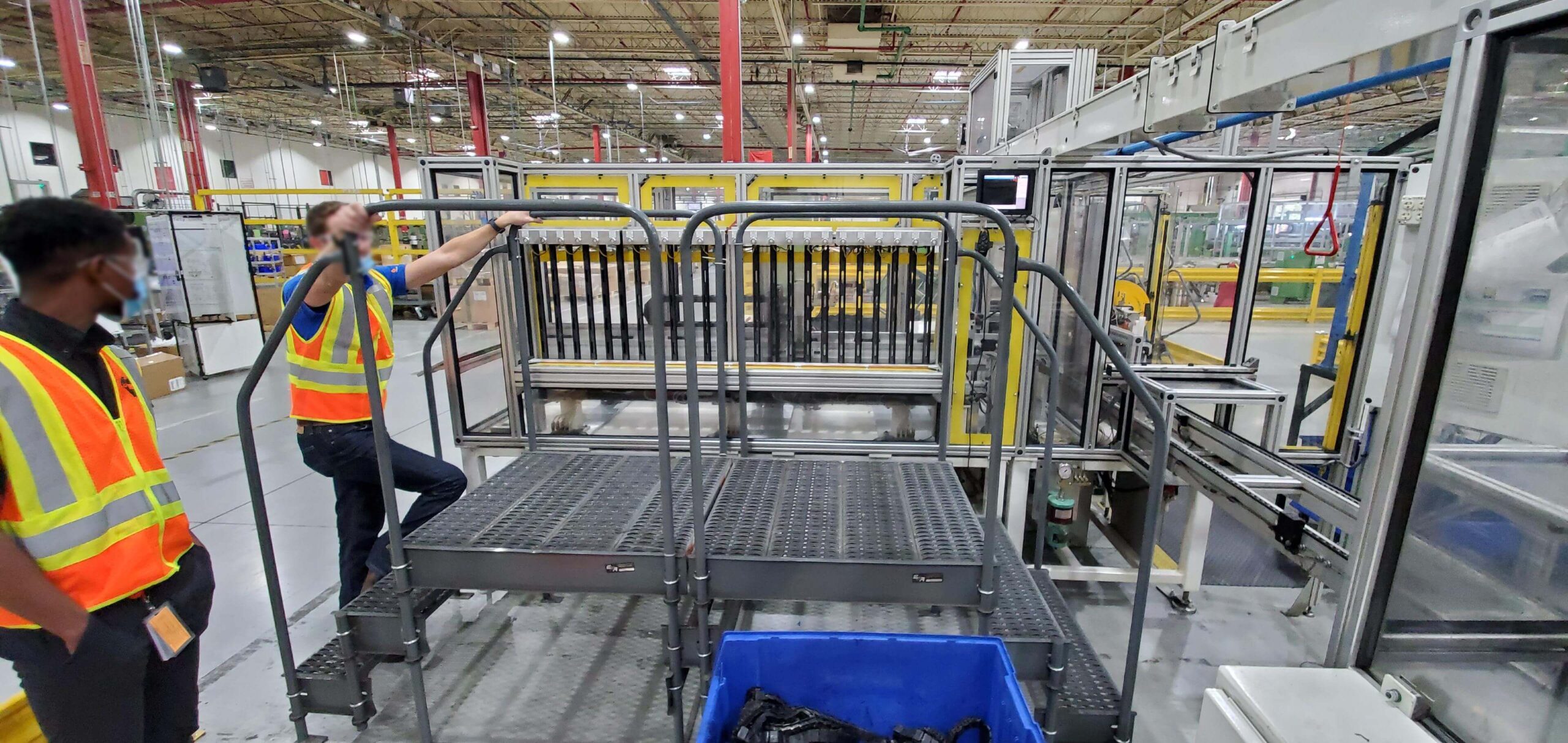
Reach the service points that a standard rectangular platform misses. A custom maintenance platform starts with the machine outline, the work being performed and the access needed around each service location.
Bring workers closer to large assemblies with a platform planned around the build sequence. The important dimensions change as parts are added, tools move and the assembly advances through the work station.
Connect an elevated work area with stairs and landings sized for the building and the job. Start with the finished rise and the available horizontal run, then map the route into and out of each landing.
Plan maintenance access around the aircraft's service points and protected surfaces. A helicopter platform requires more than a working-height measurement: the rotor, fuselage, equipment doors and maintenance sequence all affect the layout.
Build the packing station around the package and the sequence of work. A custom bench can organize the work surface, packaging supplies and frequently used tools within the space available at shipping or receiving.
Evaluate an order-picking module as part of the complete handling system. The operator position, picking task and equipment interface must be defined before the module's dimensions or configuration can be selected.
Present parts around a rotating rack when the workflow benefits from loading one side while unloading another. A carousel rack brief starts with the part shape and the position needed at the work station.
Present components at defined positions for a production or handling process. An indexing tower rack needs a clear description of the required positions and the equipment that loads or unloads it.
Move equipment or components on a rack intended for repeated trips. The design brief should cover the product during transport, loading, unloading and storage at both ends of the route.
Reduce the space taken by empty returnable racks with a fold-down arrangement. The loaded position and the folded return position both need to be described in the design brief.
Support formed bumper components without choosing contact points by appearance alone. A bumper rack brief needs part drawings, protected surfaces and the required number of components per rack.
Size a platform truck for the load and the route rather than adapting a standard cart by trial and error. The deck, handles and wheel arrangement should be considered together.
Plan an archive storage module around the automated system that will retrieve and place its contents. The system interface and dimensional requirements should lead the design brief.
Organize supplies or components in a movable module sized for the facility. The storage layout and the movement route should be planned together so access to contents does not conflict with handling the unit.
Request a storage locker around the items that need controlled access. Large tools, equipment and supplies may need a different opening, interior arrangement or handling method than a standard personnel locker.
Bring bins and small components to the point of use on a module planned for the production area. Bin access, replenishment and movement through the facility all affect the layout.
Store and move flat material on trays arranged for the required loading process. A tray cart needs both a storage brief and a description of how each tray is accessed.
Plan a storage bin for the loaded task and the empty return cycle. A collapsible layout can reduce the empty footprint, but the side-wall arrangement must still suit the contents and handling process.
The EGA catalog includes rolling ladders, industrial stairways, modular platforms and storage equipment with published model references. Compare those configurations before requesting a modification or a fully custom arrangement.
Fill out the form and our team will respond as quickly as possible. Include the dimensions and loads you know, and identify anything that needs clarification.