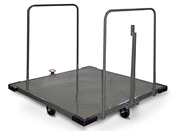
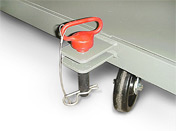
Size a platform truck for the load and the route rather than adapting a standard cart by trial and error. The deck, handles and wheel arrangement should be considered together.
EGA Products supplier example. The photographed arrangement is not a Factory Equipment installation or a confirmed design for your project.
Configuration planning
Define the arrangement before selecting the equipment.
Describe loading and unloading at each end of the route, including conveyors, benches or lift equipment. Include turns, thresholds and floor conditions. A custom deck may solve a fit problem, while the caster and handle arrangement determines how the complete load is maneuvered.
Deck shape and support points matched to the load
Handle positions selected for the travel route
Caster arrangement reviewed against floors and turns
Custom feasibility, final dimensions, rated loads and required documentation depend on the reviewed configuration. Submitting a quote request does not confirm a completed design or certification.
Questions about custom purpose-built platform trucks
Is deck size enough to choose a custom platform truck?
No. Load weight and distribution, floor conditions, turns and loading interfaces also affect the configuration. Provide the complete route and handling process with the deck dimensions.
How do I request custom purpose-built platform trucks?
Use the project quote form and include the application, dimensioned drawings, loads, quantity, delivery location and timing. Our team will review the requirements and respond as quickly as possible.
Present parts around a rotating rack when the workflow benefits from loading one side while unloading another. A carousel rack brief starts with the part shape and the position needed at the work station.
Present components at defined positions for a production or handling process. An indexing tower rack needs a clear description of the required positions and the equipment that loads or unloads it.
Move equipment or components on a rack intended for repeated trips. The design brief should cover the product during transport, loading, unloading and storage at both ends of the route.